

Listing optimization advice tends to arrive as vague principles: "improve your images," "fix your keywords," "write better bullets." Useful direction, useless execution - especially when you are auditing dozens or hundreds of ASINs and need a consistent standard every reviewer applies the same way.
This checklist is that standard. Use it per ASIN during quarterly reviews, or as the scoring rubric when prioritising which SKUs get optimization budget first. For why manual audits collapse at scale, see Amazon Listing Optimization at Scale.
How to Use This Checklist
Score each section pass / partial / fail. A listing with two fails on hero ASINs ships to the front of the queue regardless of when it was last touched. For long-tail SKUs, pass partial on bullets may be acceptable; on your top 20 revenue ASINs, it is not.
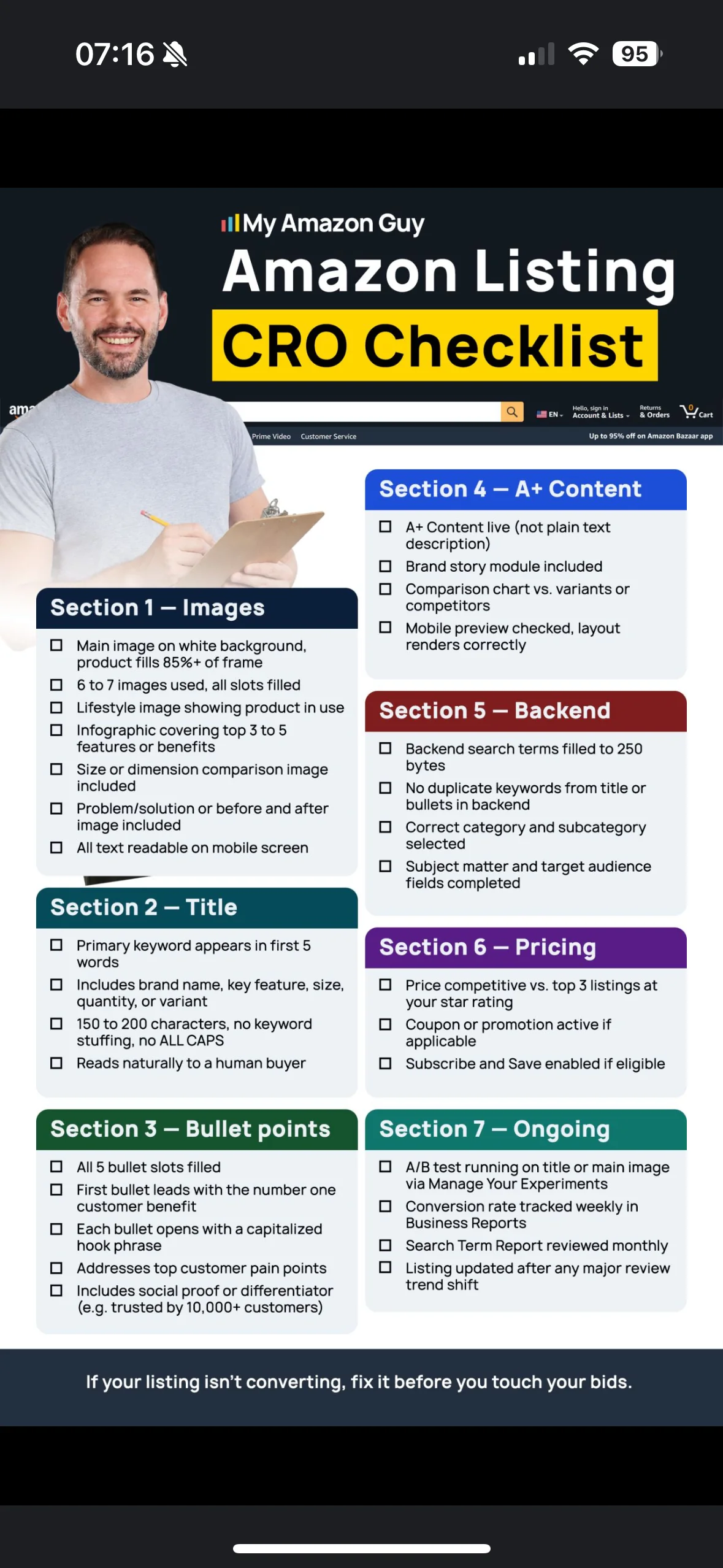
Field-ready listing audit checklist - print or share with content reviewers.
Title and Primary Keywords
Check:
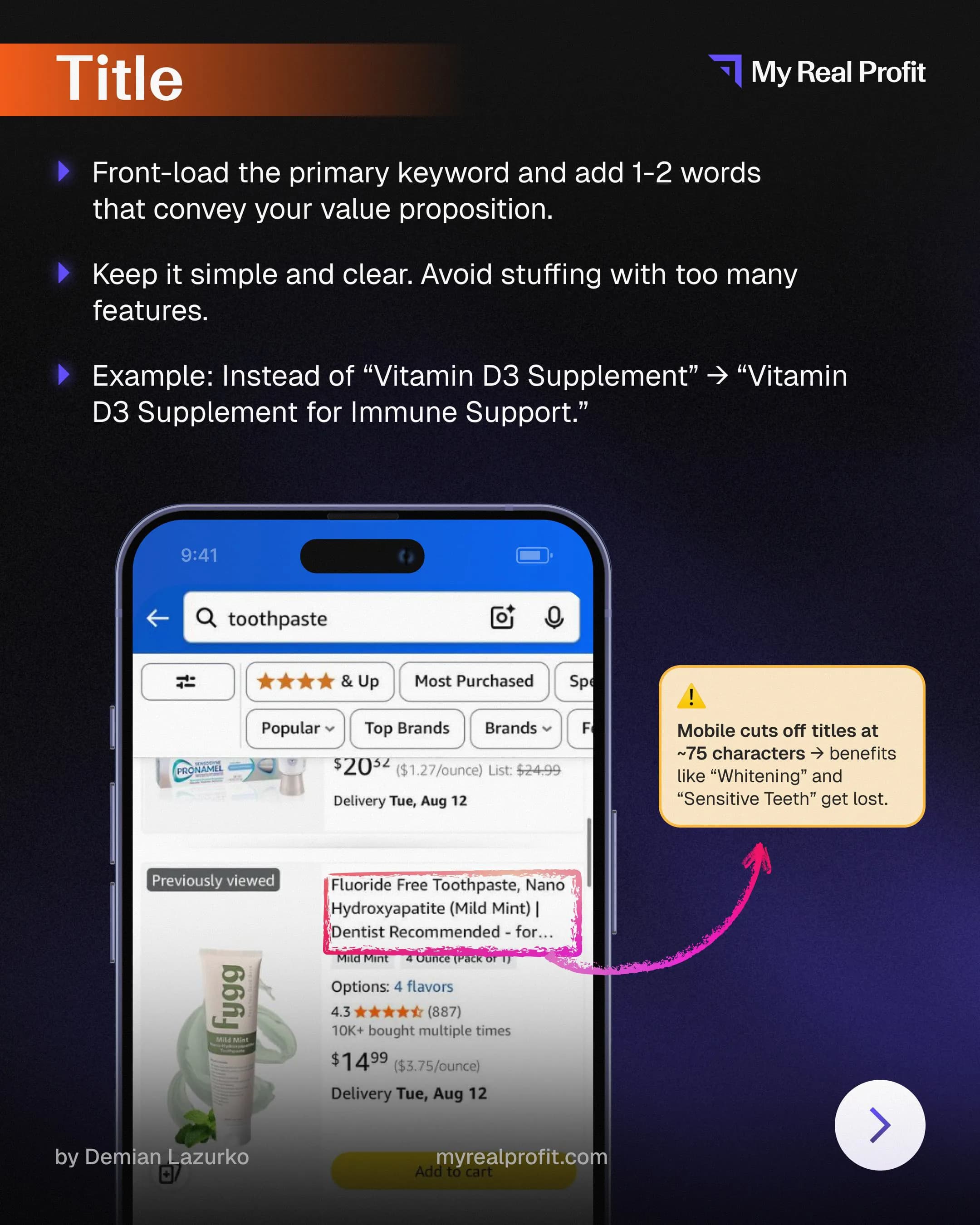
- Primary keyword appears in the first 80 characters (mobile-visible portion)
- No redundant brand repetition or forbidden special characters
- Variant attributes (size, count, colour) explicit where shoppers filter on them
- Title matches the query you are targeting per SQP - not a generic catalogue template
Fail signal: high impressions and low CTR on a query where the title does not contain the query stem. Fix the title before touching PPC.
Bullet Points and Benefit Hierarchy
Check:
- First bullet leads with the primary benefit, not brand boilerplate
- Each bullet covers a distinct value angle - no repetition across five slots
- Secondary keywords woven naturally; no comma-stuffed keyword lines
- Specs shoppers compare (dimensions, materials, compatibility) appear before lifestyle copy
Bullets are conversion layer, not SEO stuffing. They answer objections visible in reviews and competitor listings for the same query intent.
Main Image and Gallery
Check:
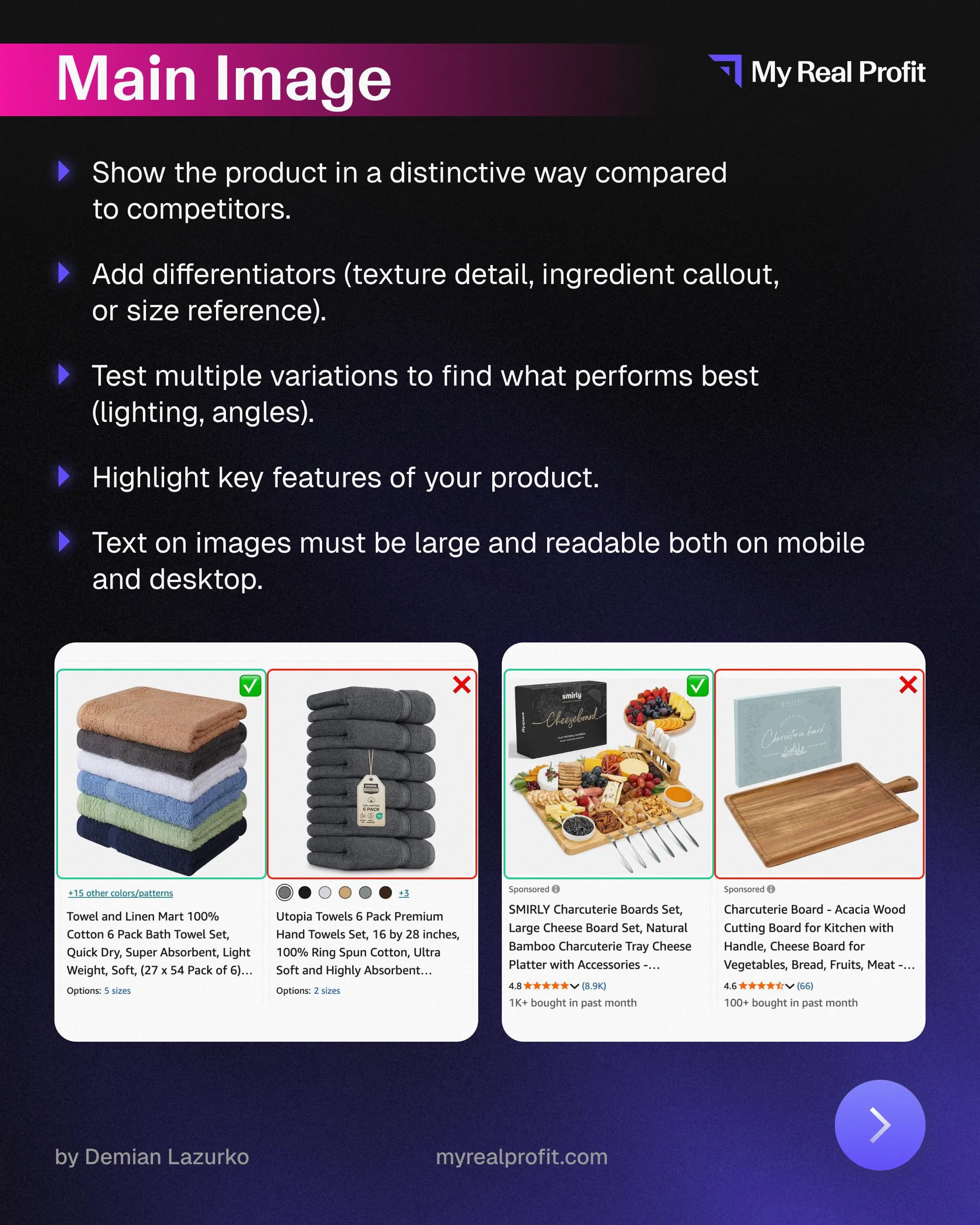
- Main image: pure white background, product fills ~85% of frame, no prohibited overlays
- Pack size and variant readable at thumbnail size
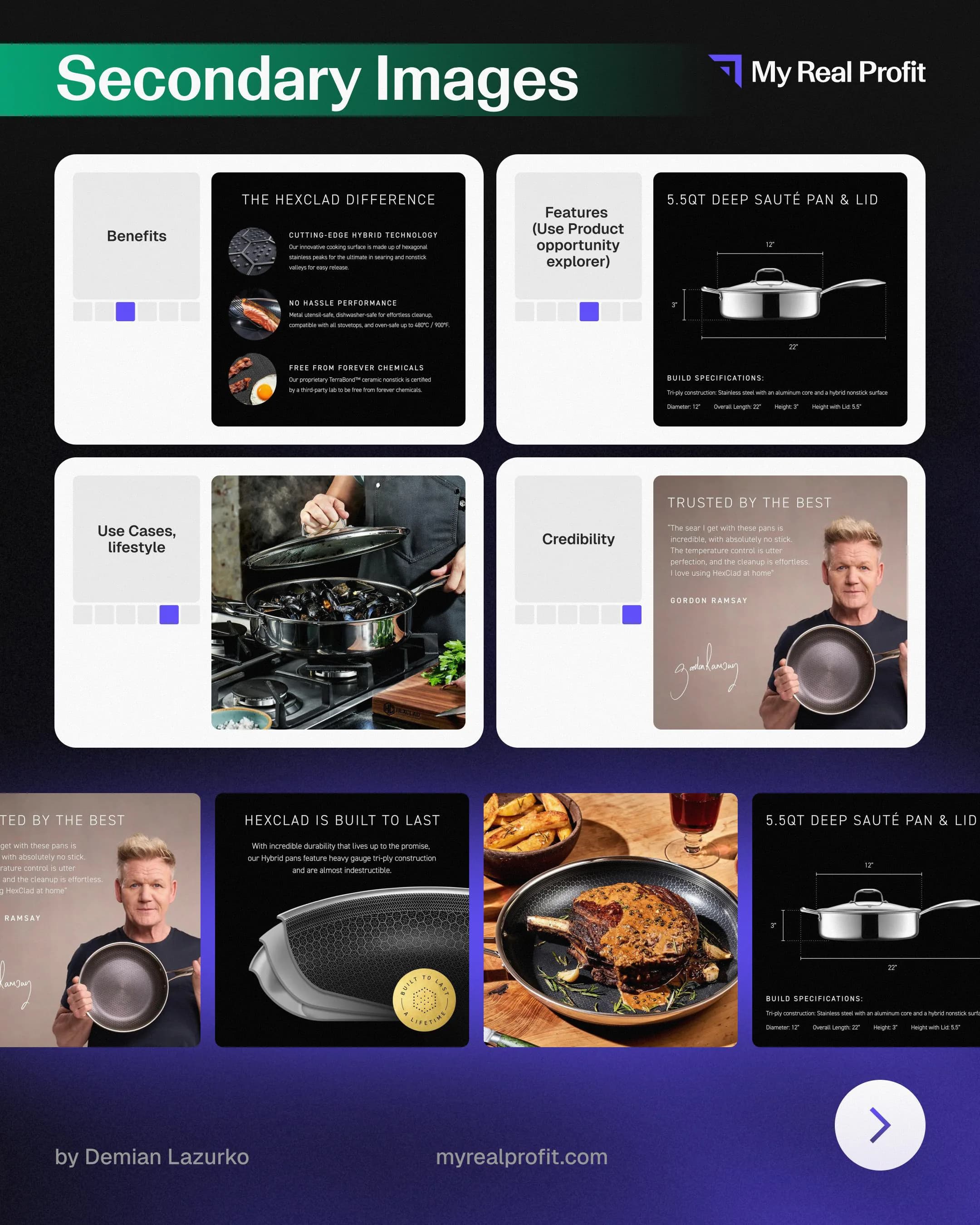
- Gallery images answer the top three purchase objections (scale, use case, contents)
- CTR below category norm triggers a main image review - see CTR optimization and main image before/after examples
Backend Keywords and A+ Content
Backend check:
- No words already in the title or bullets (byte waste)
- Common misspellings and synonym stems included where relevant
- No competitor brand names or ASINs (policy risk)
A+ check:
- Comparison charts for multi-SKU families where shoppers choose between variants
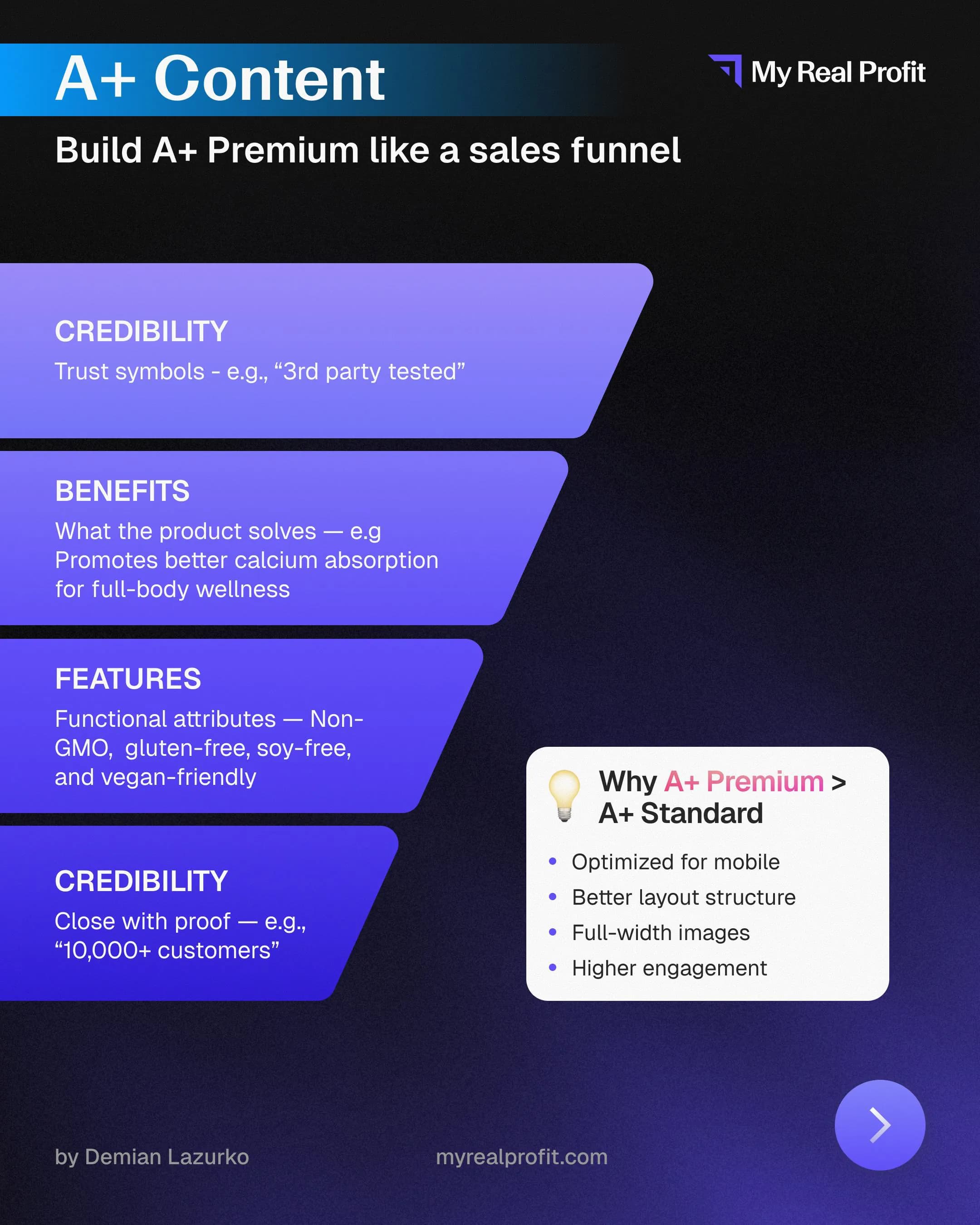
- Module order matches decision sequence: what it is → why it matters → proof → specs
- Mobile-readable text size - most Amazon traffic is phone-first
Running Checklist Audits at Scale
Manual checklist reviews work up to roughly 50-100 ASINs per cycle. Beyond that, prioritise by revenue at risk and SQP impression share - run the full checklist on heroes, a shortened version (title + main image + price) on mid-tail, and exception-only review on long-tail unless advertising data flags a problem.
The checklist is the SOP. Continuous catalogue systems automate the data pulls - SQP gaps, CTR flags, completeness scores - so human time goes to the ASINs where a fail costs the most. That is the operational shift from project-based optimization to compounding improvement described across the Cataloops blog.
Book a catalog scan - a 45-minute call where we look at your Amazon catalog, name the top three issues we'd attack first, and discuss whether a Pilot makes sense.
Book a catalog scan